Stop Smooshing: Why Overstuffed Spaces Make Organization Harder
One of the biggest mistakes people make when organizing has nothing to do with buying the wrong containers or not having enough space.
It’s what I call “smooshing.”
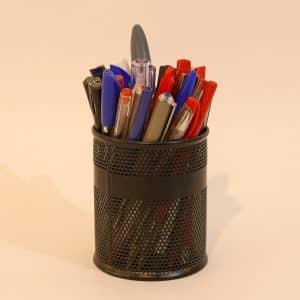
Smooshing happens when you cram so much into one space that you can no longer easily access what’s inside. Pens packed too tightly into a cup. Containers shoved in front of other containers. Cabinets so full you have to move five things just to grab the one thing you actually need.
At first glance, it can look organized because technically everything fits.
But functionally? It creates friction everywhere.
Easy Access Matters More Than Maximum Storage
A space is not truly organized if you have to fight with it every time you use it.
That’s the real issue with overstuffed drawers, shelves, baskets, and containers. Once things become difficult to grab, put away, or even see, the system starts working against you instead of supporting you.
Sometimes the solution is surprisingly simple.
Instead of cramming more pens into one overflowing cup, split them into two containers. Instead of stacking items in front of each other, give frequently used things breathing room. Instead of packing shelves to their absolute limit, leave enough space to comfortably grab what you need.
Organization works best when you can interact with your space easily.
Not when every task feels like a game of Jenga.
Containers Are Not Always the Solution
This is where people often get tripped up.
Just because something can go in a container doesn’t mean it should.
Containers can absolutely help organize categories, but they can also create new problems if they:
- Waste usable space
- Make items harder to access
- Add unnecessary lids, layers, or extra steps
- Encourage overstuffing
A perfect example is soda cans.
Many people use can dispensers or bins that actually take up more room than simply lining the cans up neatly on the shelf. Some containers are flared outward, which means you lose usable storage space immediately.
The same thing happens with baskets, bins, and decorative organizers throughout the house.
Sometimes the “organized” solution is actually less functional than no container at all.
Think About Frequency of Use
One of the easiest ways to determine whether something is organized well is to ask:
How often do I use this, and how easy is it to access?
That answer should shape the system.
For example:
- Frequently used items should require very little effort to grab.
- Rarely used items can live farther back or higher up.
- Open containers often work better for daily-use items than containers with lids.
- Drop-in systems are usually easier to maintain than systems that require multiple steps.
This is why a simple file folder sometimes works better than a binder.
A binder requires opening rings every single time you add or remove papers. A file folder allows you to quickly drop things in and move on. When something is part of your regular workflow, fewer steps matter.
The easier the system is to use, the more likely you are to maintain it.
Leave Room for Your Hands
This sounds obvious, but most people completely overlook it.
Your fingers take up space too.
If shelves are packed so tightly that you have to wedge your hand between objects or knock things over to remove something, the shelf is too full.
That tiny bit of breathing room matters.
You need enough space to comfortably grab, replace, and move items without disrupting everything around them.
A little empty space is not wasted space.
It’s functional space.
More Storage Is Not Always Better
A lot of organizing advice focuses on maximizing storage, but maximizing storage and maximizing usability are not the same thing.
Sometimes storing fewer things actually creates a smoother, more efficient home.
Think about your schedule for a second.
When every minute is booked solid with no transition time, everything feels rushed and stressful. But when you build in a little buffer time, things flow more naturally.
Your physical spaces work the same way.
When every shelf, drawer, and container is packed to capacity, your home starts to feel stressful to use. Giving things a little breathing room creates flexibility and ease.
The Goal Is Function, Not Perfection
At the end of the day, organization is not about fitting the maximum number of items into the smallest possible space.
It’s about making your life easier.
So before buying another container or trying to squeeze one more thing onto a shelf, pause and ask yourself:
- Can I easily grab what I need?
- Am I storing more than I realistically use?
- Is this system easy to maintain?
- Am I organizing… or am I just smooshing?
Because sometimes the fastest way to make a space feel calmer is simply to stop overstuffing it in the first place.