Are You Making Things More Complicated Than They Need to Be?
Sometimes the biggest obstacle to getting organized isn't that you need a better system.
It's that the system you've built has become more complicated than it needs to be.
Over time, it's easy for this to happen. Something isn't working quite right, so you make a small adjustment. Then another issue comes up, so you add another layer. Before long, you've created a solution that's far more complex than the original problem.
I've found it's worth asking a simple question every so often:
Am I making this more complicated than it needs to be?
Take a Step Back
When something starts feeling frustrating or no longer works the way you expected, resist the urge to add another fix.
Instead, take a step back.
Look at it from a different perspective. Sometimes people call it the 30,000-foot view. However you picture it, the goal is the same: create enough distance to see what's really happening.
- What was I trying to accomplish in the first place?
- Where did things start becoming complicated?
- What has changed since I first set this up?
Those questions often reveal more than another organizing product ever will.
Go Back to What's Essential
Whether it's an organizing system, a business process, or even the way you manage your daily routines, start with the essentials.
What was the original purpose?
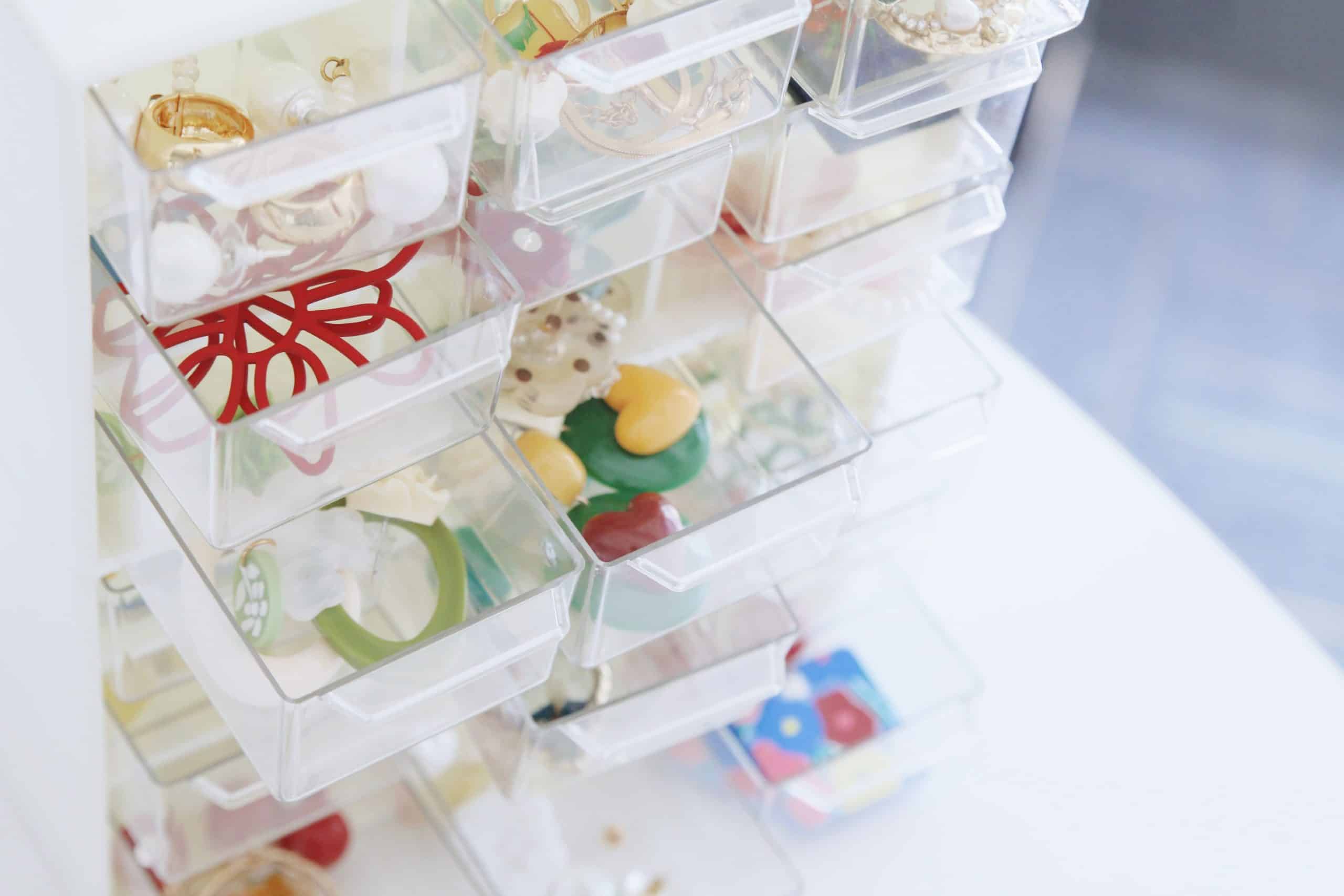
Maybe you bought a drawer organizer because it perfectly fit the items you used at the time. Months later, you've switched brands or added new supplies, and now nothing fits quite right.
The answer may not be another container.
It may be reevaluating what you're actually storing and whether the original system still serves its purpose.
Stop Adding. Start Subtracting.
When something isn't working, our first instinct is often to add another step, another tool, or another layer.
What if you did the opposite?
Instead of asking, "What else do I need?" try asking:
What can I take away?
Sometimes the simplest solution is the one we overlook.
If your keys are constantly getting misplaced, maybe you don't need an elaborate key cabinet with labeled hooks. Maybe a simple bowl by the front door solves the problem just as well.
The same principle applies to almost every organizing challenge.
Reverse Engineer the Problem
Whenever I find myself feeling stuck, I like to reverse engineer the situation.
I go back to the beginning and ask:
- What was my original purpose?
- What was I hoping this would accomplish?
- At what point did it become more complicated?
Working backward often makes it much easier to see where things drifted off course.
Simplicity Usually Wins
Organizing isn't about creating the most elaborate system.
It's about creating one that works.
If something feels overly complicated, it may be time to strip it back to the basics and rebuild from there, adding back only what is truly essential.
You may be surprised how often the simplest solution is also the one that lasts the longest.