How to Get Started Sorting Your Things (The Step Most People Rush Through)
Sorting is where organizing actually begins.
Not containers. Not labels. Not making it look nice.
If you don’t sort well, everything that comes after it is harder than it needs to be. You’ll second-guess decisions, miss duplicates, and end up rearranging instead of organizing.
So before you do anything else, slow down here.
Why sorting matters more than you think
Most people want to jump straight to “putting things away.”
But if you haven’t grouped things properly first, you don’t actually know what you have.
And that’s when you run into problems like:
-
Buying things you already own
-
Keeping too many of the same item
-
Not having what you actually need
-
Creating systems that don’t hold up
Sorting fixes all of that.
It gives you visibility before you make decisions.
Start with a clear (and realistic) setup
Before you begin sorting, make sure a few basics are in place:
-
You’re working in a small, defined area
-
You have enough time to finish that area
-
You’ve got a trash bag nearby
That’s really it.
You don’t need bins. You don’t need a full system yet. You just need enough space to spread things out and see what you’re working with.
Think in broad categories first
When you start sorting, go bigger than you think.
Don’t start with tiny categories like color or shape. That comes later, if at all.
Start with categories like:
-
Office vs. personal
-
Kitchen vs. bathroom
-
Bills vs. general paperwork
-
Supplies vs. tools
If you’re working in a specific room, an easy starting point is:
-
What belongs in this room
-
What doesn’t
That alone will move things forward quickly.
Put like things together
This is the core of sorting.
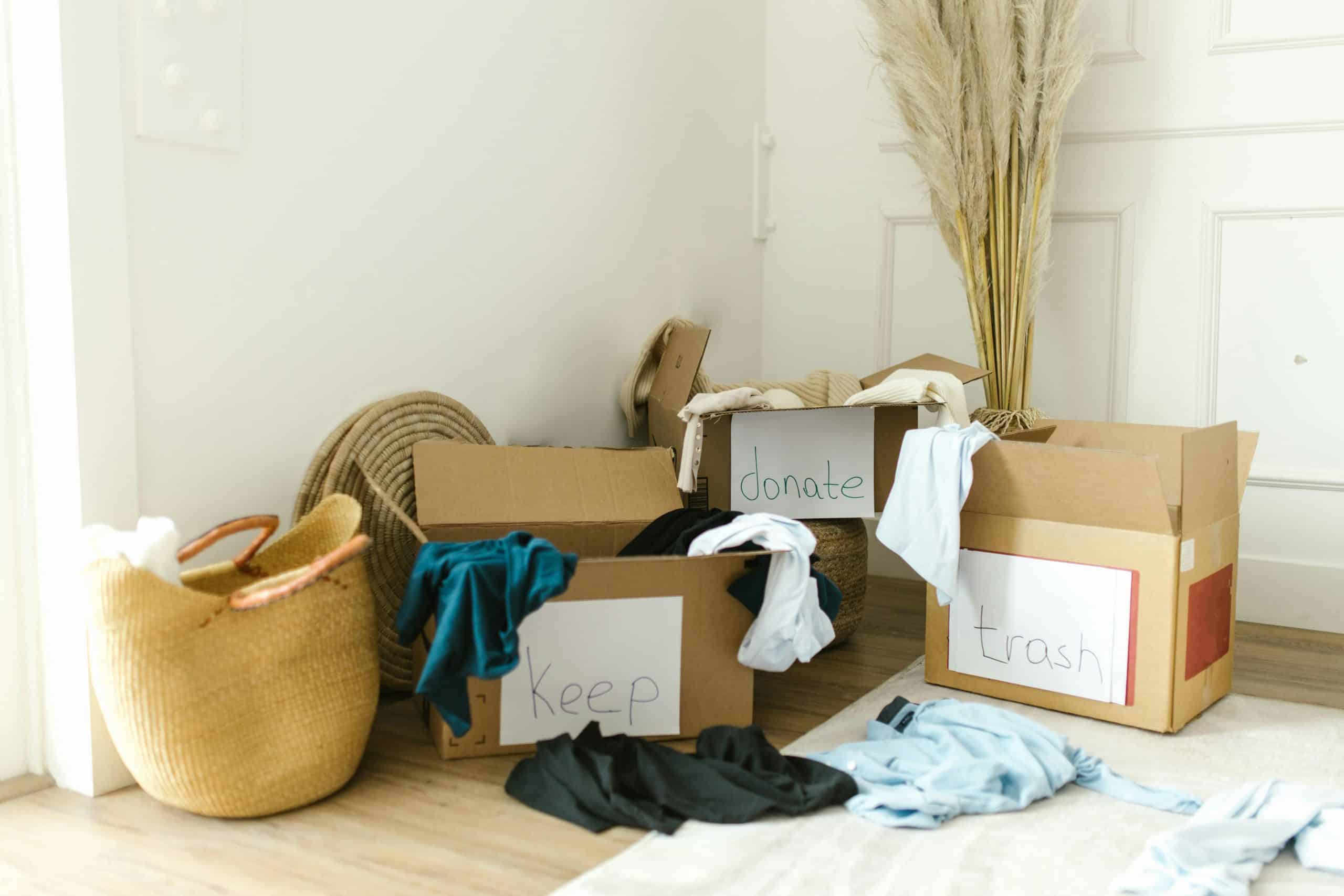
Take everything you’re working with and group similar items together.
If you’re clearing off a desk, you might end up with:
-
A pile of office supplies
-
A pile of paperwork
-
A pile of cords
-
A pile of random items that don’t belong there
You can use boxes, or you can just make piles. It doesn’t matter.
What matters is that all similar items are in the same place so you can see them clearly.
Let the categories refine themselves
Once you start grouping things, you’ll naturally notice smaller categories.
For example:
-
All office supplies go together
-
Then within that, all pens go together
-
Then maybe all sticky notes go together
You don’t need to overthink this part. Just let it happen as you see patterns.
The key is not to start too detailed too early.
Remove obvious trash as you go
You don’t need a second pass for things that are clearly trash.
As you’re sorting, go ahead and pull out:
-
Wrappers
-
Expired coupons
-
Broken items
-
Anything damaged beyond use
This keeps your piles cleaner and makes the next step easier.
If you already know it’s not staying, don’t over-process it.
Pay attention to what you discover
Sorting is where you start noticing things.
You might realize:
-
You have five of the same item
-
You’re missing something you thought you had
-
Certain things don’t belong in that space at all
This is exactly why sorting matters.
You can’t see those patterns when everything is mixed together.
Keep your space small and contained
This is where most people go wrong.
They try to sort too much at once.
That’s when you end up with everything from a room, or worse, a whole garage, spread out with no way to finish before you run out of time or energy.
Keep it contained.
A drawer. A shelf. A section of a desk.
Finish that one area, then move on.
What “done” looks like for sorting
You’re done sorting when:
-
Everything is grouped into clear categories
-
Obvious trash is gone
-
You can easily see what you have in each group
You haven’t made deep decisions yet. That comes next.
Right now, your job is just to turn “hodgepodge” into something you can actually work with.
And once you’ve done that, the rest of the organizing process gets a whole lot easier.